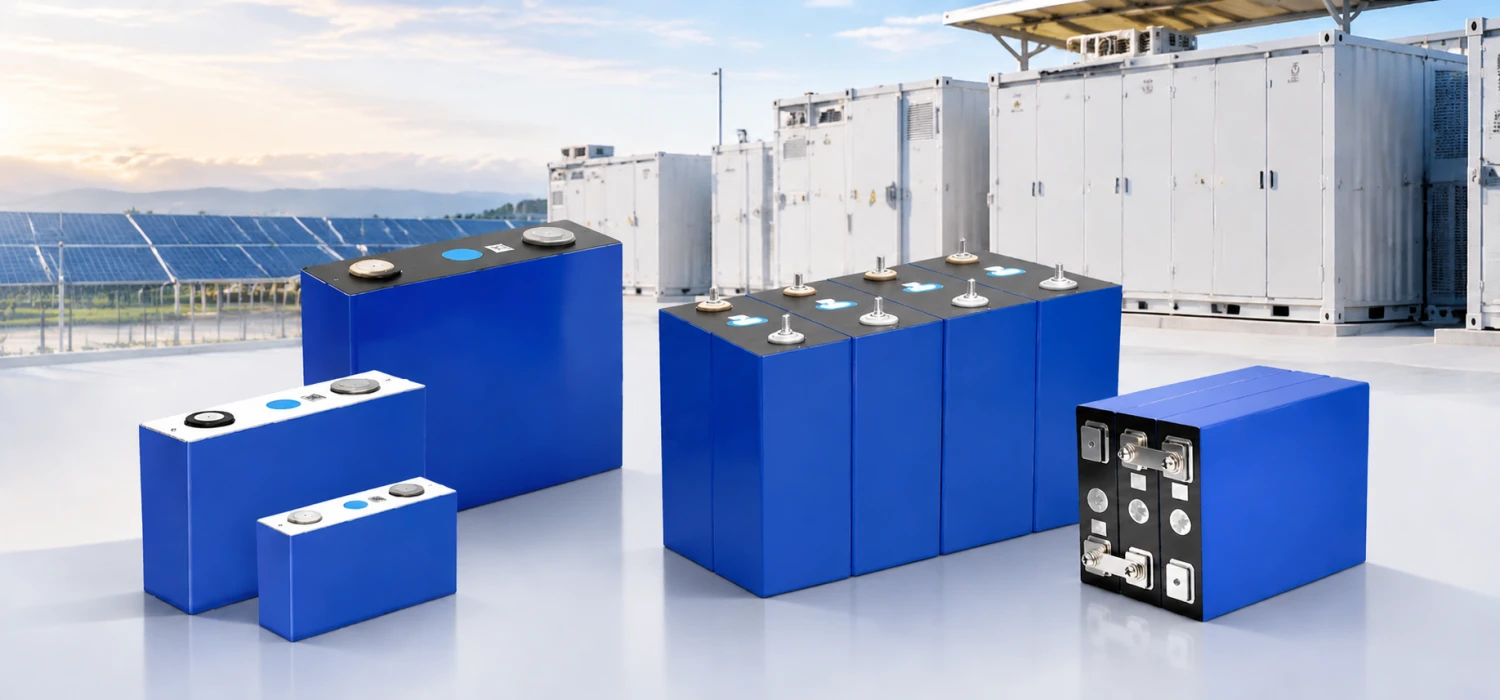
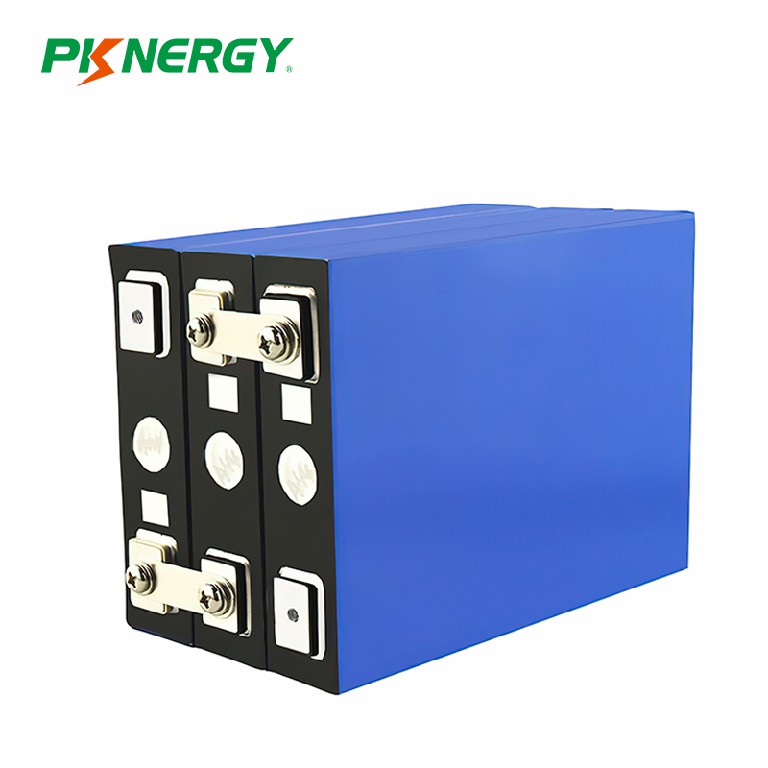
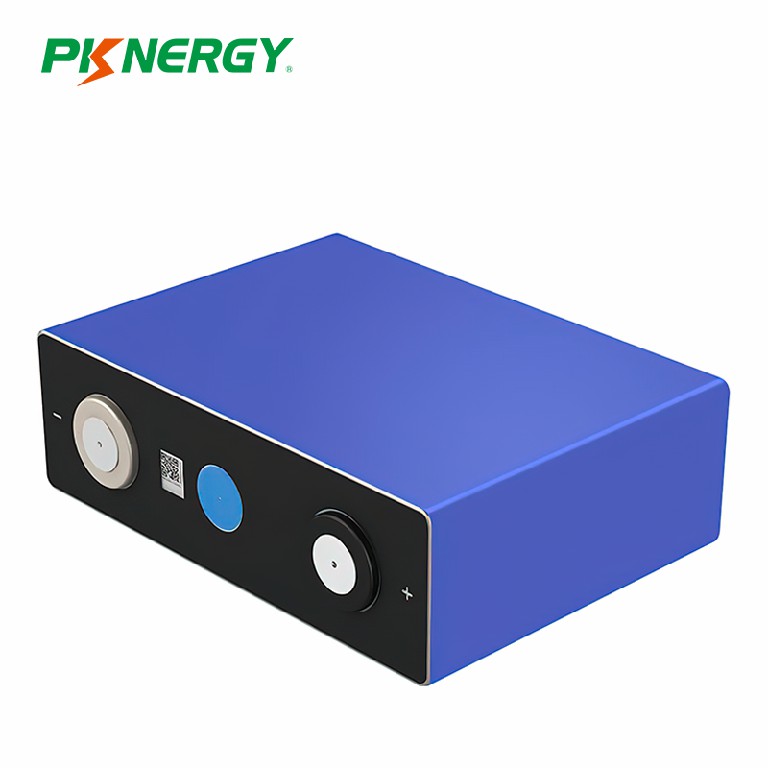
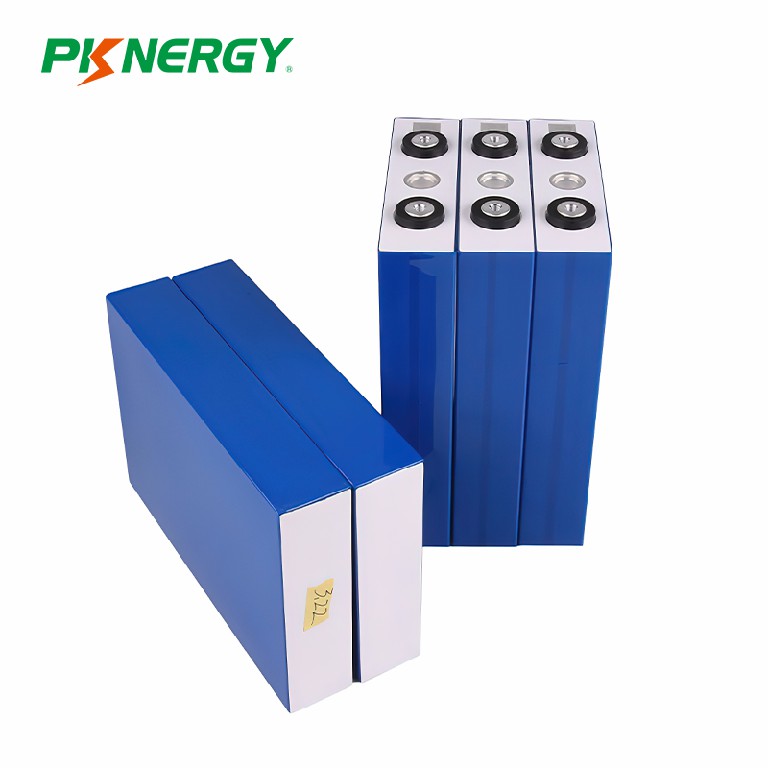
Long Cycle Life
Flexible Customization Options
● Up to 6,000 charge-discharge cycles.
● Designed for long-term battery applications.
Product Features
Stable LiFePO4 Chemistry for Safer Operation
Flexible 100Ah–200Ah Capacity for Different Pack Designs
320Wh–640Wh Rated Energy per Cell
Standard 3.2V Nominal Voltage for Easy Integration
6,000 Cycles for Long Service Life
Stable Performance Across 2.5–3.65V
Compact Prismatic Design for Higher Space Utilization
Cobalt-Free LiFePO4 Chemistry for Cleaner Storage
Reliable Discharge from -20°C to 60°C
Certification: CE, UN38.3, MSDS,IEC/ISO9001/ISO1400
100Ah–200Ah LiFePO4 Battery Cell Specifications
| Item | 100Ah | 120Ah | 140Ah | 150Ah | 160Ah | 176Ah | 200Ah |
|---|---|---|---|---|---|---|---|
| Nominal Voltage | 3.2V | 3.2V | 3.2V | 3.2V | 3.2V | 3.2V | 3.2V |
| Nominal Capacity | 100Ah | 120Ah | 140Ah | 150Ah | 160Ah | 176Ah | 200Ah |
| Nominal Energy | 320Wh | 384Wh | 448Wh | 480Wh | 512Wh | 563.2Wh | 640Wh |
| Dimensions (D×W×H) | 34×200×168mm* | 48×173×166mm | 46×200×168mm | 33×200×207mm | 72×174×138mm | 54×173×200mm | 待确认* |
| Net Weight | 2.78kg* | 2.84kg | 3.10kg | 3.20kg | 3.46kg | 3.82kg | 待确认* |
| Max. Charge Current | 100A* | — | — | 150A | — | — | 200A* |
| Continuous Discharge Current | 100A* | — | — | 150A | — | — | 200A* |
| Charge Voltage | 2.5–3.65V* | — | — | 2.5–3.65V | — | — | 2.5–3.65V* |
| Discharge Cut-off Voltage | 2.5V* | — | — | 2.5V | — | — | 2.5V* |
| Charge Temperature | 0–45°C* | — | — | 0–45°C | — | — | 0–45°C* |
| Discharge Temperature | -20–60°C* | — | — | -20–60°C | — | — | -20–60°C* |
| Storage Temperature | 15–35°C* | — | — | 15–35°C | — | — | 15–35°C* |
| Cycle Life | 6,000 cycles* | 6,000 cycles* | 6,000 cycles* | ≥4,000 cycles | 6,000 cycles* | 6,000 cycles* | ≥4,000 cycles* |
| Warranty | 5 Years* (Model list reference) | ||||||
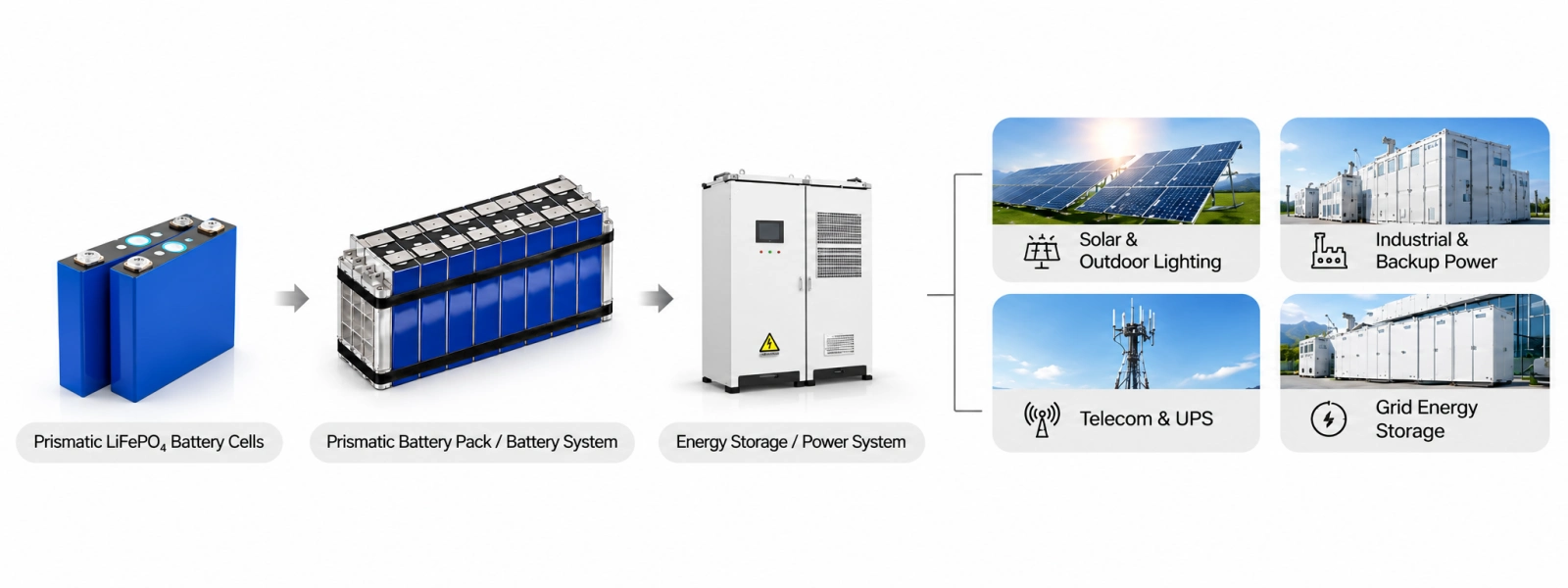
Applications
Inverter Compatible
Benefits of PKNERGY Prismatic LiFePO4 Battery Cells
FAQs
Q
Can I connect multiple LiFePO4 cells in series or parallel?
A
Yes. PKNERGY Prismatic LiFePO4 Battery Cells can be connected in series or parallel to achieve different voltage and capacity requirements. The configuration should be designed according to your battery system specifications, with appropriate battery management and protection.
Q
Can PKNERGY provide customized LiFePO4 battery cells or battery packs?
A
Yes. We support customized battery solutions based on project requirements, including cell capacity selection, battery pack voltage, capacity, dimensions, and connection configurations. Please share your technical requirements with our team so we can recommend a suitable solution.
Q
What should I consider when selecting a Prismatic LiFePO4 Battery Cell?
A
When selecting a LiFePO4 cell, consider the required voltage, capacity, charging and discharging current, dimensions, operating temperature, and expected cycle life. Your application and battery pack design will determine the most suitable cell specifications.
Q
What information is needed to get a quotation for LiFePO4 battery cells?
A
To receive an accurate quotation, please provide your required cell capacity, quantity, application, and any specific technical requirements. If you need a customized battery pack, please also share the required voltage, capacity, dimensions, and connection configuration. Our team will review your requirements and provide a suitable proposal.
Why PKNERGY
Quality Control
Created the Safest & More Environmentally Future
While focusing on research and development, we also pay attention to quality. ISO9001 certification in 1999, ISO14001 certification in 2004, OHSAS18001 and ISO45001 in 2016, IATF16949 certification in the same year; “National Integrated Management System” in 2018; ISO13485 certification in 2020, related products can provide GB, CE, UN, UL and other international certification.
Save Money, Power a Greener Future
PKNERGY is committed to delivering reliable and cost-effective LiFePO₄ battery solutions for diverse applications. With durable battery technology, flexible configurations, and professional customization, we help customers improve energy efficiency, reduce long-term operating costs, and support a more sustainable future.