
Prismatic LiFePO₄ Battery Packs for RV, Marine & Industrial Applications
As demand for reliable and long-lasting energy solutions grows, Prismatic LiFePO₄ Battery Packs are becoming an increasingly popular choice for recreational vehicles, marine electrical systems, industrial equipment, and specialized power applications.
PKNERGY focuses on LiFePO₄ battery technology and customized battery pack solutions for diverse power requirements. From RV house batteries and yacht service batteries to industrial auxiliary power and backup systems, PKNERGY provides battery solutions designed around application-specific voltage, capacity, discharge, and installation requirements.
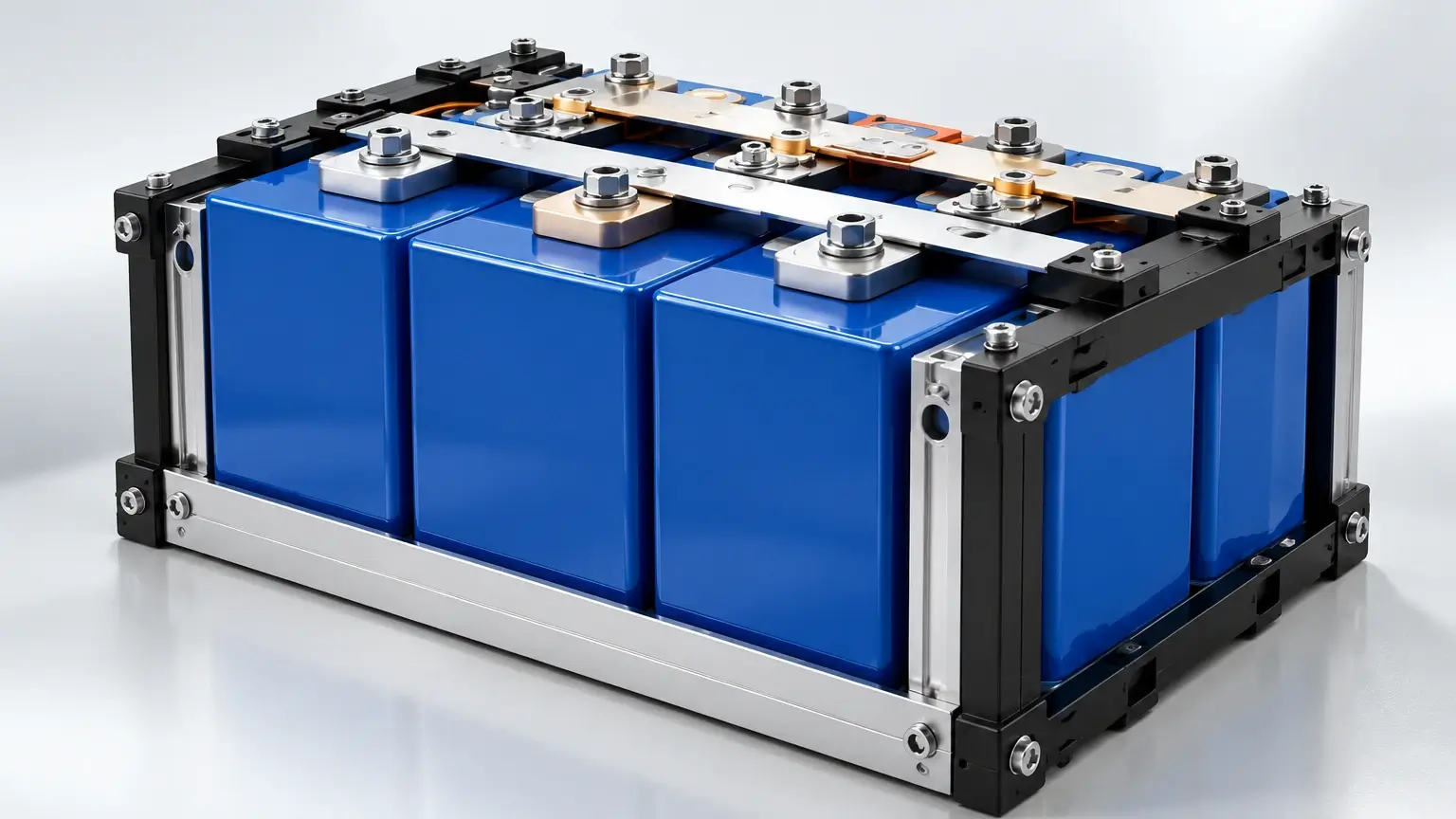
01 What Are Prismatic LiFePO₄ Battery Packs?
Prismatic LiFePO₄ batteries use rectangular lithium iron phosphate cells assembled into battery packs. Their structured form supports practical space utilization and integration into equipment compartments.
With a typical nominal cell voltage of 3.2V, prismatic LiFePO₄ cells can be connected in series to create different battery configurations. Common examples include 25.6V battery packs using 8 cells in series and 51.2V battery packs using 16 cells in series.
- Long cycle life under specified operating conditions
- Good thermal stability compared with many other lithium-ion chemistries
- Flexible voltage and capacity configurations
- Suitable for repeated charge and discharge cycles
- Customizable battery pack design and system integration
02 PKNERGY Prismatic LiFePO₄ Battery Solutions
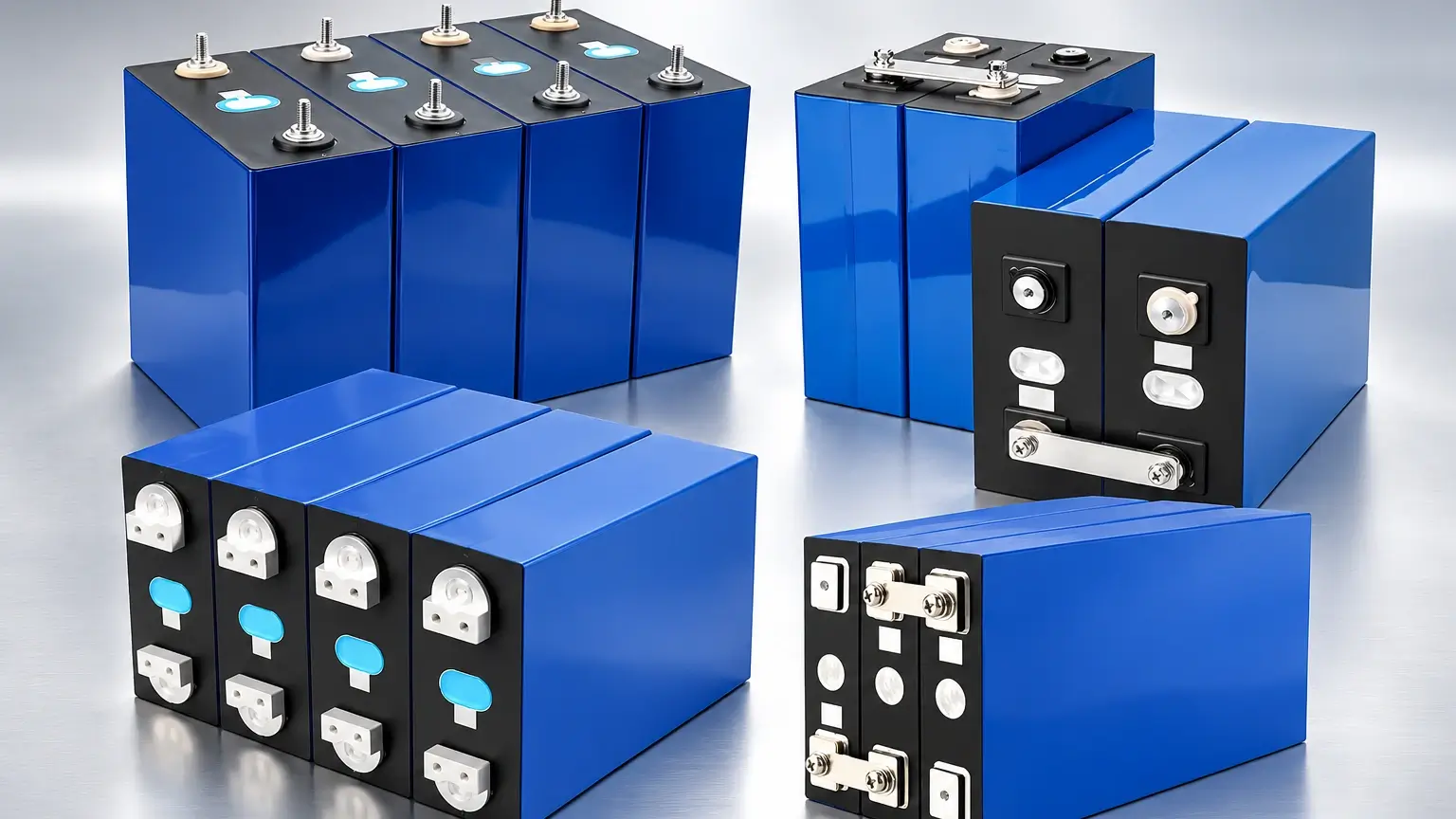
24V LiFePO₄ Battery Packs
A 25.6V nominal LiFePO₄ battery pack is commonly used in RV electrical systems, marine service equipment, industrial machinery, and auxiliary power applications.
Typical applications include:
- RV house batteries and off-grid power systems
- Boat and yacht service batteries
- Industrial control and auxiliary power equipment
- Solar-compatible battery systems
48V-Class LiFePO₄ Battery Packs
A 51.2V nominal battery pack, typically configured with 16 LiFePO₄ cells in series, can support compatible higher-voltage power systems and equipment requiring substantial energy capacity.
- Large RV and off-grid electrical systems
- Marine auxiliary power and selected yacht service systems
- Industrial equipment and backup power applications
- Customized inverter-based energy systems
The appropriate configuration depends on the equipment’s voltage range, energy consumption, continuous discharge current, peak load, and charging requirements.
03 Applications of Prismatic LiFePO₄ Batteries
1. RV House Batteries
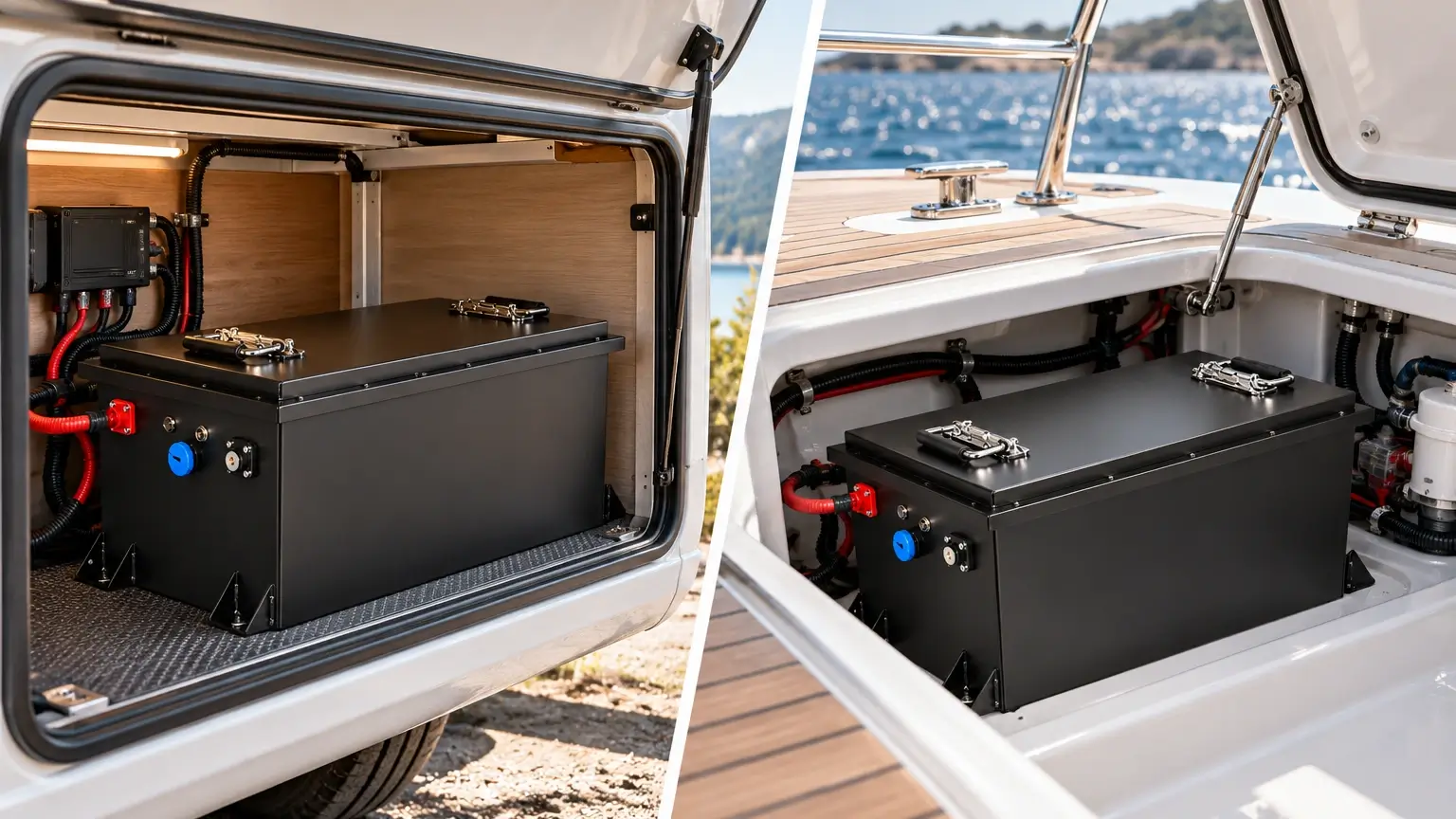
A reliable RV lithium battery helps power onboard appliances when shore power is unavailable. Prismatic LiFePO₄ battery packs can support compatible refrigerators, lighting, water pumps, ventilation, communication devices, and inverter-powered equipment.
When selecting a LiFePO₄ battery for RV applications, consider daily energy consumption, battery capacity, solar charging compatibility, inverter requirements, installation space, and low-temperature charging protection.
2. Marine and Yacht Batteries
Marine LiFePO₄ batteries provide rechargeable power for compatible onboard electrical loads, including navigation electronics, lighting, refrigeration, communication equipment, and auxiliary systems.
PKNERGY supports application-oriented battery selection for yacht builders, marine equipment suppliers, and system integrators. Marine battery projects should consider secure mounting, moisture protection, corrosion resistance, charging compatibility, and applicable vessel safety requirements.
3. Industrial Power and Backup Systems
Prismatic LiFePO₄ battery packs can also serve industrial equipment, automation and control systems, monitoring devices, mobile machinery, and compatible backup power applications.
For industrial battery solutions, PKNERGY evaluates voltage, load profile, operating temperature, cycle-life targets, protection functions, and integration requirements to help customers identify a suitable battery configuration.
4. Customized Energy Storage and Specialized Equipment
Beyond RV, marine, and industrial applications, prismatic LiFePO₄ batteries can be considered for off-grid systems, renewable-energy equipment, and specialized power applications. Battery configuration and system compatibility should be verified for each project.
04 PKNERGY Prismatic LiFePO₄ Battery Specifications
PKNERGY’s battery selection covers different voltage and capacity requirements. The following examples illustrate potential configurations for 24V-class and 48V-class applications.
| Configuration | Nominal Voltage | Capacity | Cell Configuration | Weight | Reported Cycle Life |
|---|---|---|---|---|---|
| 52Ah Prismatic Pack | 25.6V | 52Ah | 8S1P | 12.60kg | 3,000 cycles |
| 52Ah Prismatic Pack | 51.2V | 52Ah | 16S1P | 23.93kg | 3,000 cycles |
| 90Ah Prismatic Pack | 25.6V | 90Ah | 8S1P | 25.36kg | 6,000 cycles |
| 100Ah Prismatic Pack | 25.6V | 100Ah | 8S1P | 25.61kg | 5,000 cycles |
| 100Ah Prismatic Pack | 51.2V | 100Ah | 16S1P | 48.11kg | 5,000 cycles |
Note: Cycle-life figures are based on supplied specifications under stated test conditions and are not guaranteed service-life values. Actual performance depends on operating temperature, charge and discharge rates, depth of discharge, and other factors. Confirm all specifications against the final product datasheet before publication.
05 How to Choose the Right Prismatic LiFePO₄ Battery
Selecting the right lithium battery requires evaluating the complete application rather than capacity alone.
- Voltage: Confirm nominal voltage and the equipment’s permitted operating range.
- Capacity: Calculate energy consumption and the required operating time between charges.
- Discharge current: Verify continuous current and short-duration peak current requirements.
- Installation: Check dimensions, weight, mounting, and environmental conditions.
- Charging: Ensure compatibility with the charging source and appropriate low-temperature protection.
- BMS and safety: Evaluate battery protection, monitoring, communications, and applicable certifications.
06 Why Choose PKNERGY?
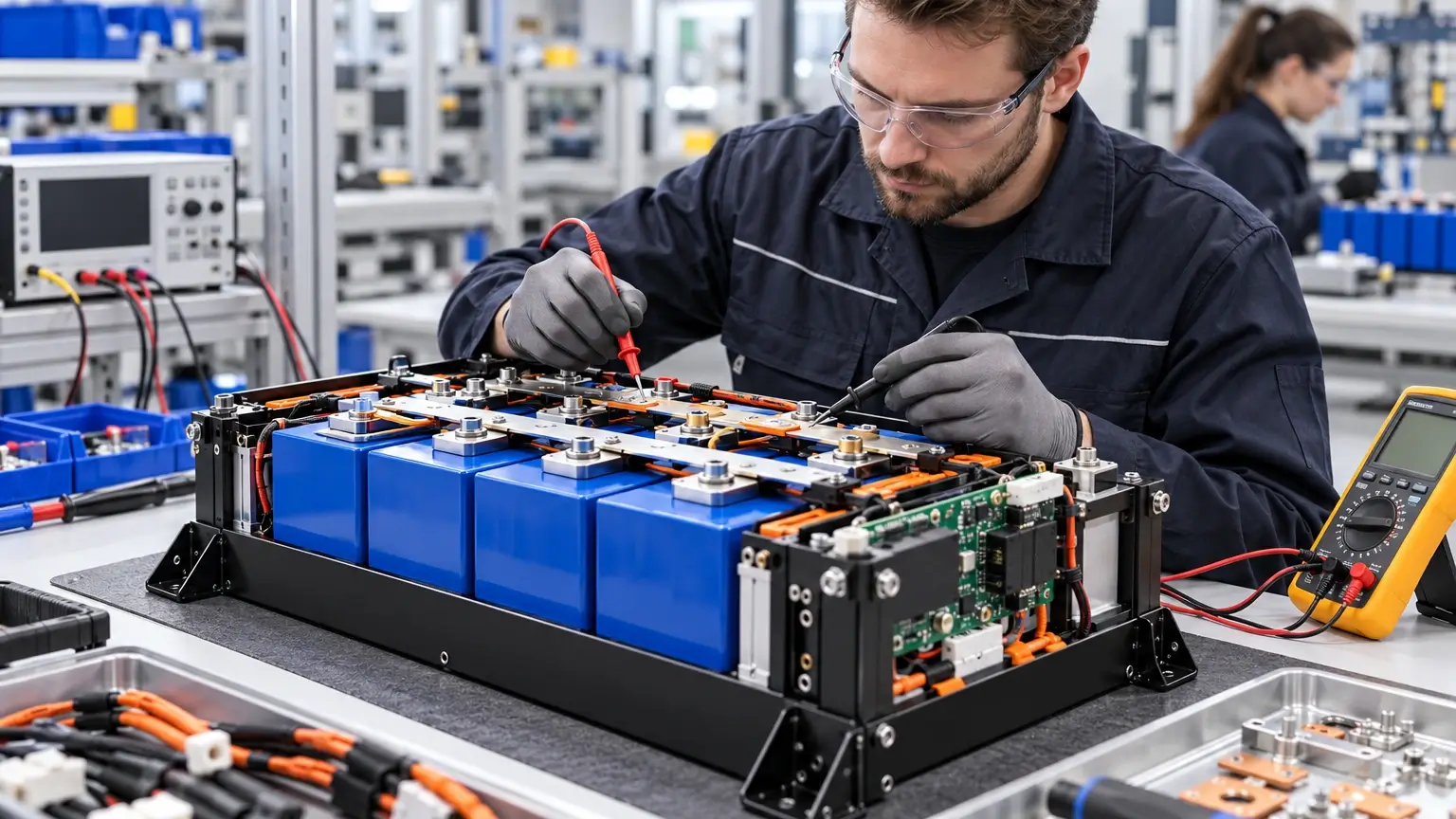
Choosing a battery supplier requires more than comparing prices and rated capacity. Product consistency, technical communication, system compatibility, and application experience are important factors in successful battery projects.
PKNERGY focuses on LiFePO₄ battery technology and application-specific power solutions, with particular attention to RV house batteries, marine and yacht service batteries, and industrial battery applications.
- Multiple voltage and capacity configurations
- Application-oriented battery selection
- Support for customized battery pack requirements
- Technical evaluation for electrical and mechanical integration
07 Frequently Asked Questions
Are Prismatic LiFePO₄ Batteries Suitable for RVs?
Yes. They can serve as RV house batteries when voltage, capacity, discharge current, charging compatibility, and installation requirements are properly matched.
Can LiFePO₄ Batteries Be Used in Yachts?
Yes. They can power compatible marine service loads. Battery installation, charging equipment, environmental protection, and applicable marine safety requirements must be considered.
What Is the Difference Between 24V and 48V-Class LiFePO₄ Batteries?
Typical configurations are 25.6V nominal with 8 cells in series and 51.2V nominal with 16 cells in series. Always verify the voltage requirements of the connected equipment.
Does PKNERGY Support Customized Battery Packs?
PKNERGY welcomes B2B inquiries for application-specific battery solutions. Customers can provide their voltage, capacity, current, dimensions, operating temperature, charging method, and BMS requirements for technical evaluation.
Contact PKNERGY for Prismatic LiFePO₄ Battery Solutions
Whether you need an RV lithium battery, a marine battery for a yacht, or a customized industrial LiFePO₄ battery pack, PKNERGY can help evaluate your application requirements and identify a suitable configuration.
Contact PKNERGY to discuss your battery project, including voltage, capacity, discharge current, installation dimensions, and system integration requirements.

