
Designing an Efficient Solar + Battery System: A Technical Guide for Engineers & Installers

Designing an Efficient Solar + Battery System: A Technical Guide for Engineers & Installers
Solar energy continues to expand worldwide, but without proper battery storage, solar panels alone cannot ensure stable nighttime power or backup during grid outages. A well-engineered solar + lithium battery hybrid system is essential for reliability and long-term performance. :contentReference[oaicite:0]{index=0}
Industry Background
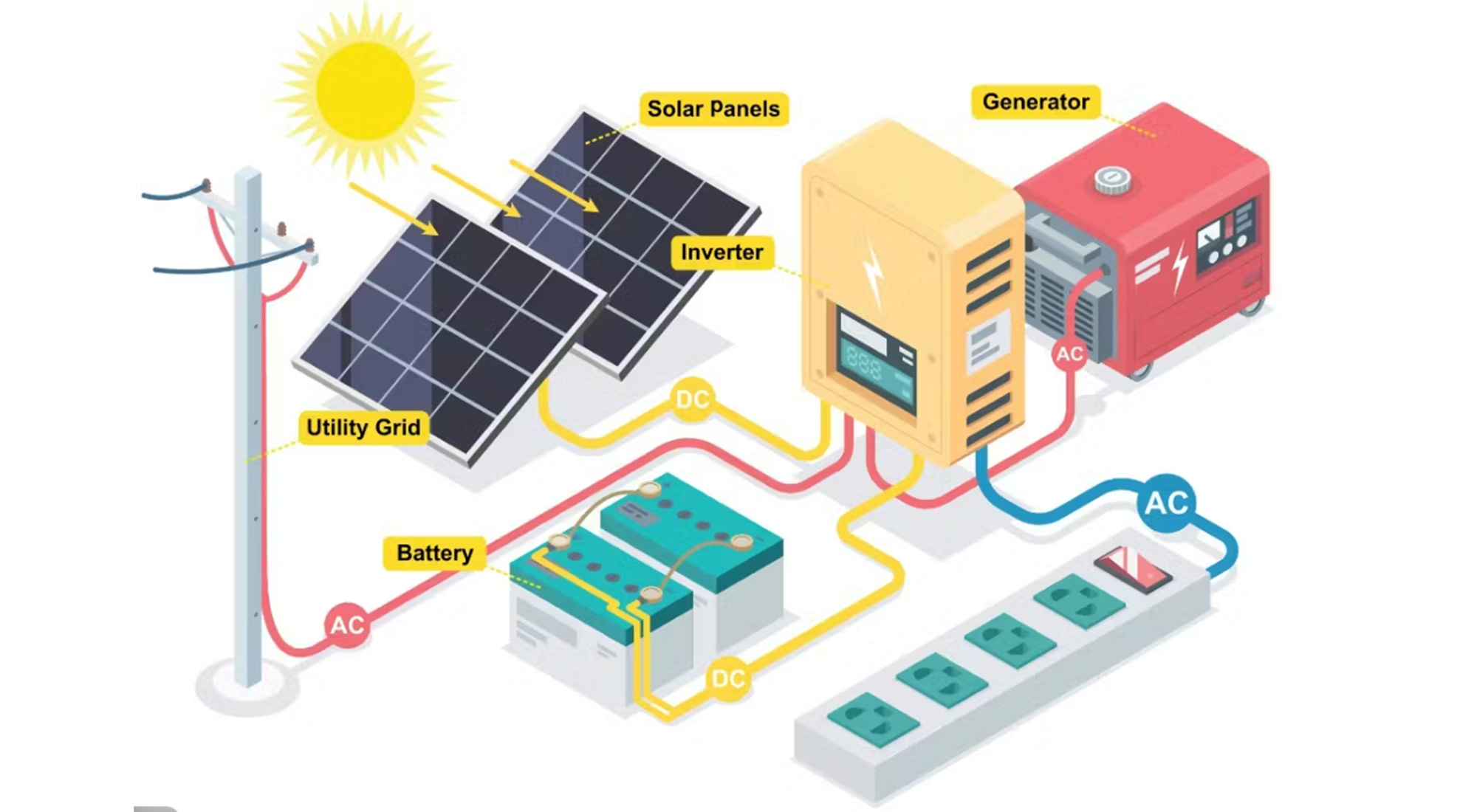
Hybrid solar systems integrate photovoltaic panels, inverters, and lithium energy storage systems. These systems are now widely adopted for both residential and industrial applications. PKNERGY supplies LiFePO₄-based BESS solutions designed for performance, stability, and safety. :contentReference[oaicite:1]{index=1}
Pain Points for System Designers
Engineers and installers often face critical design challenges: :contentReference[oaicite:2]{index=2}
- Incorrect matching of solar panels vs. battery storage
- Choosing the wrong inverter type
- Battery voltage not compatible with inverter DC input
- Insufficient backup hours due to small battery bank
- Lack of clarity between single-phase & three-phase system design
Solution Value: Why Proper System Design Matters
A correctly engineered solar + storage system provides: :contentReference[oaicite:3]{index=3}
- 24/7 uninterrupted power supply
- Lower energy bills through peak shifting
- Maximum utilization of daytime solar generation
- Reliability with LiFePO₄ cycle life and safety
- Smart management with EMS/monitoring
PKNERGY offers complete solutions from 5–10 kWh home batteries to 200–500 kWh commercial & agricultural BESS.
Technical Insights
1. Determining System Voltage
Correct DC voltage selection is the foundation of hybrid system design. :contentReference[oaicite:4]{index=4}
- Single-phase homes: 48V battery banks
- Three-phase systems: 320–800V high-voltage BESS
Examples:
- 60 kWh three-phase → 384V DC
- 210 kWh three-phase → 768V DC
2. Proper Inverter Selection
Inverter type determines system behavior and backup capability: :contentReference[oaicite:5]{index=5}
- Off-grid inverter: best for areas with frequent blackouts
- Hybrid inverter: supports PV + grid + battery integration
- PCS (30–100 kW): for industrial & agricultural BESS
Learn more about PKNERGY inverter-compatible BESS:
Energy Storage System Solutions
3. Solar Panel Sizing Example
Using 620W solar panels as a reference: :contentReference[oaicite:6]{index=6}
- 10 kW → ~16 panels
- 30 kW → ~50 panels
- 100 kW farm → ~160 panels
4. Battery Capacity Calculation
A simple and effective sizing method: :contentReference[oaicite:7]{index=7}
Daily load (kWh) × Backup hours = Required battery capacity
Example:
- 52 kW water pump × 8 hours = 416 kWh/day
- Typical recommendation: 200–300 kWh high-voltage BESS
See large-scale BESS configurations:
Industrial & Commercial Energy Storage Systems
5. Safety & Compliance
High-capacity energy storage systems must follow international safety standards: :contentReference[oaicite:8]{index=8}
- UN38.3 certified battery modules
- IEC62133 for cell safety
- CE / MSDS documentation
- Fire suppression for ≥100 kWh indoor BESS
Use Cases
PKNERGY solar + storage systems are used in: :contentReference[oaicite:9]{index=9}
- Homes with unstable grid
- Farms using 30–100 kW pumps
- Commercial shops & supermarkets
- Telecom towers & remote stations
- Off-grid hotels, clinics & resorts
Conclusion
A properly engineered hybrid solar system is the most reliable and cost-effective method to maintain round-the-clock power. PKNERGY provides home energy storage and large-scale BESS cabinets, supporting installers and engineers in delivering long-term, stable energy solutions. :contentReference[oaicite:10]{index=10}
Contact Zavier | PKNERGY Energy Co., Ltd.
Zavier Wang
Email: sale5@pknergy.com
Tel / WhatsApp: +86 138 2371 6492
Website: www.pknergypower.com

